Call for an immediate police, fire or medical emergency.
United States · household preparedness
The first 72 hours
start before the emergency.
Build a practical supply kit, family communication plan and offline information set around your household, local hazards and official U.S. guidance.
Wireless Emergency Alerts can reach compatible phones in an affected area.
Check local emergency management, evacuation zones and shelter information.
WHY 72 HOURS
A useful baseline, not a promise.
Power, water, communications and transport can be disrupted. Basic supplies help a household manage while responders focus on the most urgent needs.
United States
FEMA's Ready campaign advises keeping enough supplies for several days. Local and state guidance may recommend more for particular hazards or remote areas.
THE METHOD
Make three decisions before you shop.
A good kit begins with the people who will use it.
Know your hazards
Use local emergency management maps and guidance for storms, floods, wildfire, earthquakes or other local risks.
Map household needs
Include medications, disability needs, infants, older adults, pets and anyone who may need help.
Store and review
Start with what you own, add gaps gradually and check food, water, batteries and documents on a schedule.
PRACTICAL GUIDE
What to prepare for several days.
This is a starting framework, not a universal shopping list. Adjust quantities to official local advice, climate and household needs.
Water and food
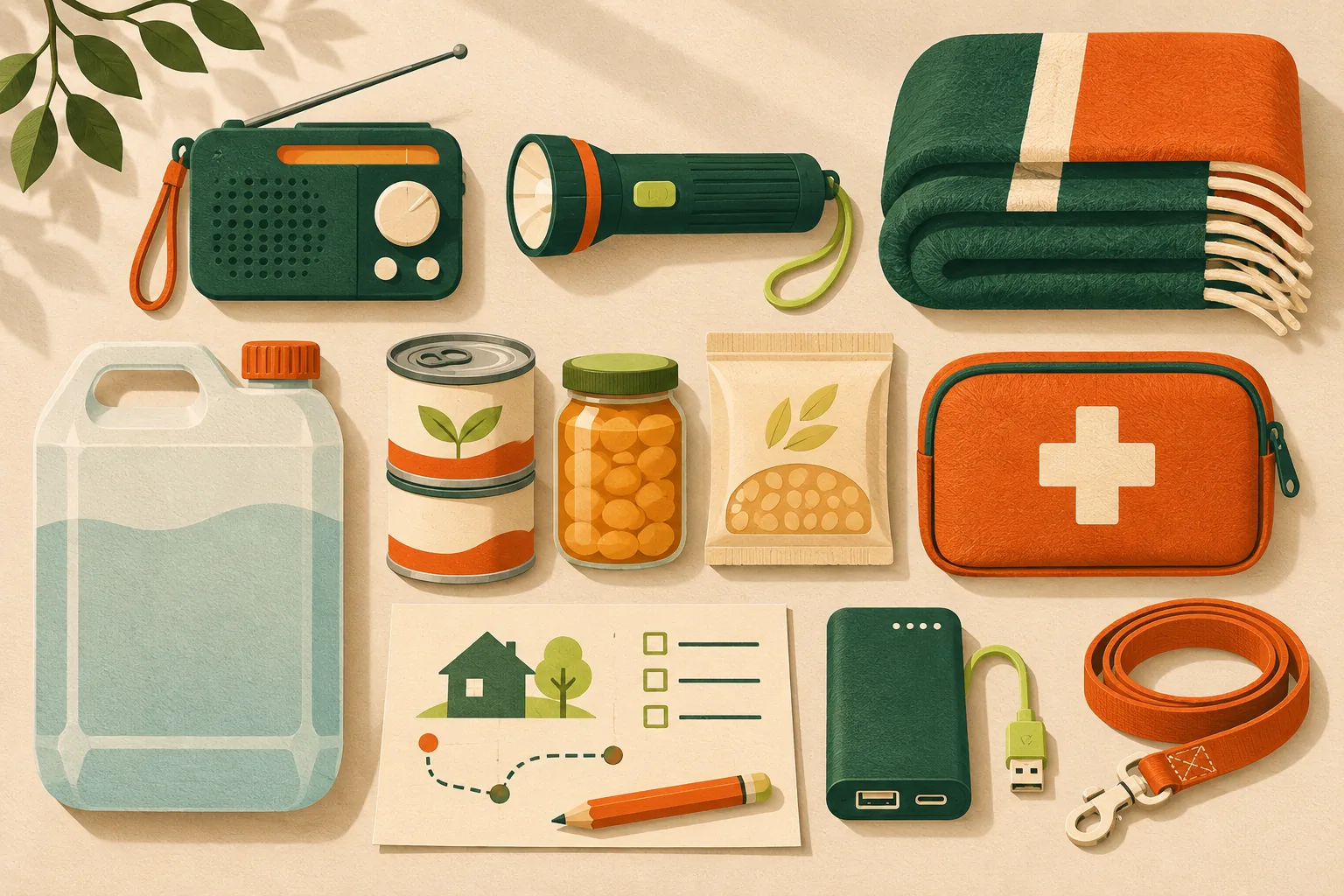
- Water and nonperishable food for several days
- Food that works without refrigeration or complex cooking
- Manual can opener and household dietary supplies
Health and sanitation
- Prescription medicines and a written medication list
- First-aid and hygiene supplies
- Glasses, medical devices and backup-power planning
Light and communication
- Flashlights, compatible batteries and a radio
- Charged power banks, cables and paper contact list
- NOAA Weather Radio and trusted local alert channels
Documents and plan
- Protected copies of key documents and some cash
- Meeting places, out-of-area contact and evacuation routes
- Supplies for children, pets and support needs
If someone relies on powered medical equipment, make a backup plan with health professionals, the utility and local emergency services. Do not change treatment based on an online checklist.
IN THE UNITED STATES
Local hazards shape the plan.
A hurricane evacuation zone, wildfire area and winter-storm region need different actions. Official instructions always take priority.
Emergency
Use 911 only for immediate emergencies. Keep non-emergency numbers and utility outage contacts available offline.
Public alerts
Wireless Emergency Alerts require no signup on compatible devices. Also enable state and local alert systems and monitor NOAA Weather Radio where appropriate.
Local planning
Find your state, tribal, territorial, county or city emergency management office. Record evacuation zones, shelters and official alert sources.
OFFICIAL U.S. SOURCES
Official U.S. sources
Hours72Kit summarizes public guidance and is not a government or emergency service. Follow current official instructions.
FAQ
Frequently asked questions
Do I need to buy a premade kit?
No. Inventory what you already have, then fill genuine gaps for your household and hazards.
Is exactly 72 hours always enough?
No. It is a common starting point. Ready.gov advises supplies for several days, and local guidance may call for more.
Where should supplies be stored?
Keep home supplies dry and accessible, and smaller portable sets where you spend time, if appropriate.
HOURS72KIT · PDF72H
CHECKLIST
CHECKLIST
Printable resources
Emergency-kit checklist
Checklists and forms to keep offline with your emergency supplies.
POCKET72 · IN DEVELOPMENT
Keep your plan close.
Pocket72 will turn guides, checklists and recurring reviews into a personal plan. Real product screens will be added when ready.
Visit pocket72.com ↗App Store and Google Play: coming later