Guide contents
Practical overviews to prepare your household, understand hazards and reach the right official local sources.
- Know local signals, routes and shelter instructions for nearby sites; keep a radio available.
- If told, go indoors, close openings, stop ventilation and monitor authorities; use an interior room above ground, not a basement, with no flames or smoking; do not travel to collect family.
- Ventilate or evacuate only when instructed and do not touch residue or suspicious material.
Practical step-by-step guide
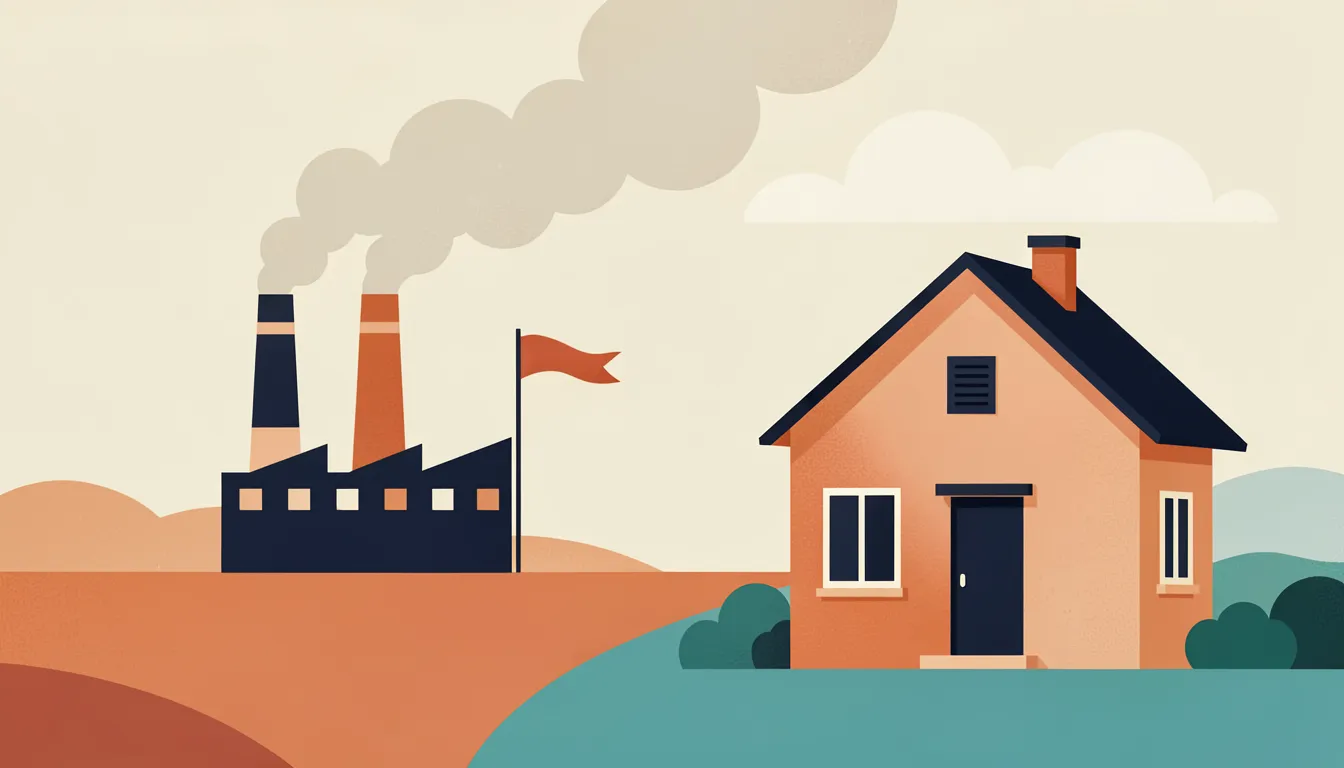
An industrial accident or hazardous-materials incident can happen at a plant, a depot or during the transport of goods by road or rail: fires, explosions or the release of toxic chemicals into the air. Some substances have no smell, so you cannot rely on your nose. Depending on the type of incident and the risk, the authorities may tell you to stay indoors or to evacuate: they decide, based on what they know. The most important thing is to listen to official alerts and follow instructions exactly. This guide explains how to prepare, how to shelter at home if asked, how to evacuate and what to do afterwards.
Before: what to prepare
- Find out whether you live, study or work near industrial sites, depots, or roads and railways used for dangerous goods, and ask your local authorities what plans and warnings exist for your area.
- Ask your local authority or civil protection service how you will be alerted (sirens, phone messages, radio, loudspeakers) and what each signal means.
- Choose an interior room above ground, with few windows and openings, where you can shelter. Do not choose a basement: some gases are heavier than air. Know how to switch off your home's ventilation.
- Prepare a kit with duct tape, scissors and plastic sheeting to cover doors, windows and vents, plus a battery radio, torch, water and medicines.
- Make a household plan: who is where, how you check in, where you meet if you must evacuate. Find out the emergency plans of schools and workplaces.
- Keep household chemicals in their original containers, never in food containers, out of children's reach, and never mix different products.
- Teach everyone you live with the warning signs: difficulty breathing, burning eyes, nausea, and burning in the nose or throat.
During: what to do
- Listen to the radio, television or official alerts and follow the instructions carefully. They can change with the risk: sometimes it is safer to stay indoors, other times it is better to evacuate.
- If told to stay indoors: bring family and pets inside, close doors, windows and vents, and switch off air conditioning, fans and ventilation. Do not smoke or light flames.
- Go to an interior room above ground, not a basement, and seal gaps under and around doors and windows, vents and extractor fans with wet towels, tape and plastic. Stay there until the authorities say it is over.
- If you smell something sharp or your eyes, nose or throat burn, cover your nose and mouth with a damp cloth and rinse your eyes with water. Do not eat or drink food and water that may be contaminated.
- If you are told to stay where you are, follow the instructions of the school and the authorities about children: schools and nurseries have emergency plans. Moving about outside may put you in danger.
- If told to evacuate, do it at once, using the routes given. Try to work out where the substance is coming from, move away, and if the building is contaminated leave without passing through the affected area.
- If you are outside, move away from the source at once, upwind or crosswind, and go into the nearest closed building. Do not go closer to look and do not try to get home.
- If you are in a car, close the windows and vents, switch off the air conditioning and heating, park out of the way of rescuers and go into the nearest closed building.
- Use the phone only for emergencies, to keep lines free.
After: getting back to normal
- Do not leave your shelter, even to help others, until the authorities say it is safe. Leave at once only if the building catches fire or fills with smoke or gas. If you evacuated, go home only when you are told to.
- If you have been exposed to the substance and help is not immediately available, the best action is to decontaminate: remove all clothing and items in contact with your body, cutting off anything that would be pulled over your head, and seal them in a plastic bag.
- Wash your hands with soap and water, gently wash your face and hair with soap and water, then rinse. Flush your eyes with plenty of water for at least 15 minutes. If you can, take out contact lenses first; take off glasses too.
- As soon as possible, go to a medical facility for a check-up and any treatment needed.
- When you are told you can go back, follow the authorities' instructions on ventilation, cleaning, water, and food and garden produce in the area.
Mistakes to avoid
- Relying on smell alone: some toxic substances have no odour.
- Rushing to school to collect your children against the instructions of the authorities and the school.
- Going closer to look at the incident, or to take photos or videos: it puts you at risk and gets in the way of rescuers.
- Leaving shelter too early, or to help someone before the authorities give the all-clear.
- Opening windows to "air the room" while being told to stay sealed in, or leaving air conditioning and ventilation running.
- Tying up phone lines with calls to ask for news: use the radio and official alerts.
- Ignoring an evacuation order because "I can't see anything from here".
- Sheltering in a basement or a low room: some gases are heavier than air and collect there.
- You have difficulty breathing, burning eyes, nose or throat, nausea, dizziness or loss of coordination after an incident: call emergency services at once.
- You see smoke, fire, a cloud, a leak or a lorry spilling a substance and nobody seems to have reported it: move away and call emergency services.
- You have had contact with a dangerous substance on your skin or in your eyes: decontaminate if help is not immediately available and get medical help.
- Someone has collapsed or is very unwell: call emergency services at once and follow their instructions; do not enter a contaminated area to reach them.
- A frail, older or disabled person near you cannot evacuate or shelter: tell the authorities and emergency services.
Before: Industrial accident and hazardous release
Know local signals, routes and shelter instructions for nearby sites; keep a radio available.
- Check flood risk, severe-weather advice, your council and the resilience forum or partnership for your nation.
- Include prescriptions, mobility or communication needs, babies, older people, pets and neighbours.
- Store supplies where they are easy to reach and review them every six months or when needs change.
During
If told, go indoors, close openings, stop ventilation and monitor authorities; use an interior room above ground, not a basement, with no flames or smoking; do not travel to collect family.
UK Emergency Alerts can sound on compatible phones without an app. Government will never ask for payment or personal information in an alert.
After
Ventilate or evacuate only when instructed and do not touch residue or suspicious material.
Fit the plan to the people
Include medication, disability, children, older adults, pets, language, transport and reliance on power or water.
- Bottled water and food that keeps
- Food that does not rely on refrigeration or lengthy cooking
- Manual tin opener and supplies for dietary needs
- Essential medication and a written medicines list
- First-aid and hygiene items
- Baby, disability, mobility and pet supplies
- Battery or wind-up torch and radio
- Power bank, cables and paper contact list
Country information: United Kingdom
Flooding, coastal hazards, storms and utility failures vary by location. Follow instructions from emergency responders and local authorities.
Use Be Ready and your council, then check the correct resilience body: an LRF in England or Wales, an RRP or LRP in Scotland, or an EPG in Northern Ireland. Use the flood-warning service for your nation.
Use 999 or 112 for immediate danger. For urgent, non-life-threatening health help, check the correct NHS service for your nation; Northern Ireland uses local Phone First and GP out-of-hours arrangements.
Frequently asked questions
How do I know whether to stay indoors or evacuate?
Listen to official alerts and follow the instructions of the local authorities: it depends on the type of incident and the risk. Sometimes it is safer to stay indoors, other times it is better to evacuate.
Can I go and collect my child from school?
Follow the instructions of the school and the authorities. If you are told to stay where you are, do not go out: schools have emergency plans, and moving about outside can expose you to the risk and get in the way of rescuers.
What does sealing a room mean?
Closing the gaps under and around doors and windows, vents and extractor fans with wet towels, tape and plastic sheeting, after switching off ventilation and air conditioning.
I have been exposed to a chemical: what do I do?
Remove contaminated clothing and seal it in a bag, wash your skin with soap and water, and flush your eyes with water. Then go to a medical facility as soon as you can.
Does this guide apply to every situation?
No. It is an organising baseline; the hazard, location and official instructions may require different action.
Official sources
Hours72Kit is independent and does not replace emergency services, government advice or professional support.
- Ready.gov (FEMA) — Chemicals and Hazardous Materials Incidents ↗
- Ready.gov (FEMA) — Shelter ↗
- WHO — Chemical safety ↗
- GOV.UK Be Ready — hazards ↗
- Be Ready — prepare for emergencies ↗
- UK Emergency Alerts ↗
- Local resilience bodies across the UK ↗
- Ready Scotland ↗
- NI Direct — be ready for emergencies ↗
- Check flood risk ↗
- Met Office weather warnings ↗
Keep your plan close.
Pocket72 will bring personal checklists, household information and review reminders together. Real screens will be added when ready.