Guide contents
Practical overviews to prepare your household, understand hazards and reach the right official local sources.
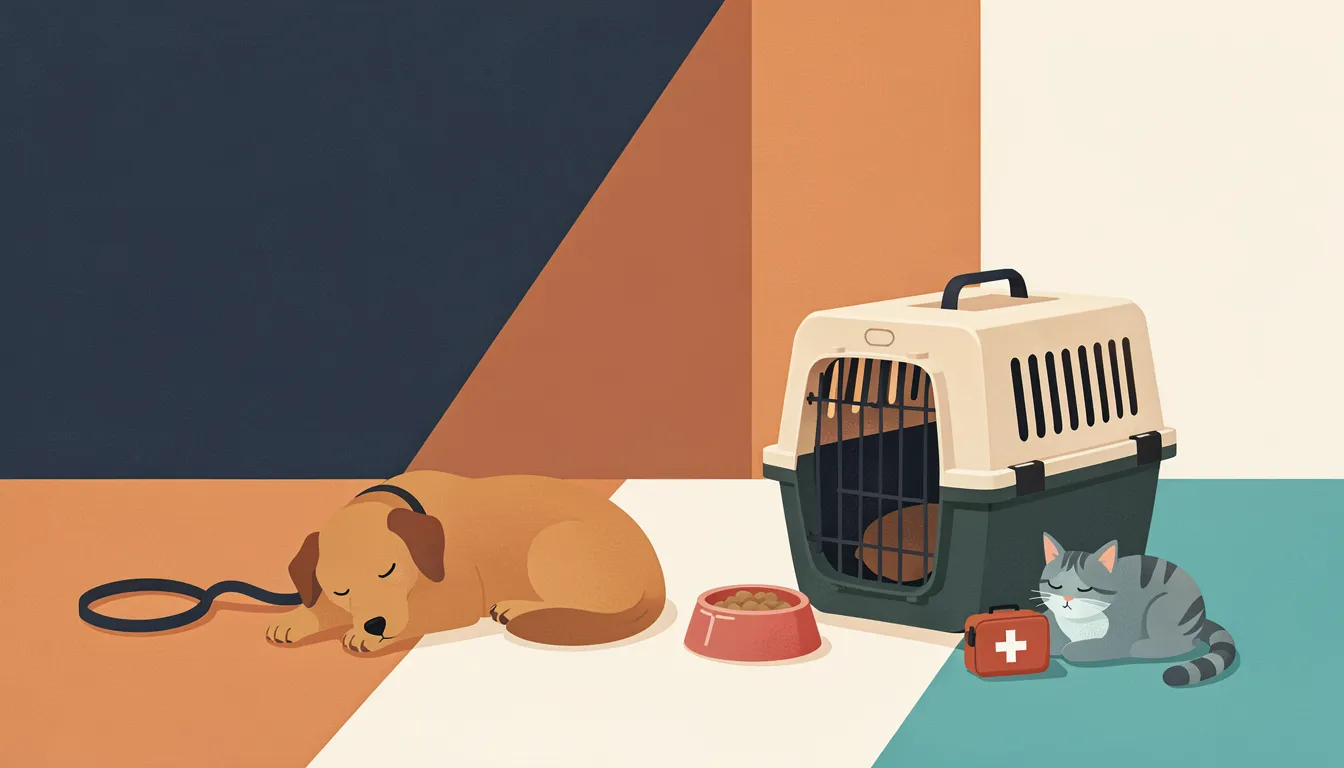
- Prepare a carrier, lead, identification, medicine, food and pet-friendly destinations.
- Keep animals controlled and never leave them in an evacuated or exposed area.
- Check for injury and stress, avoid contaminated ground or water and renew identification and supplies.
Practical step-by-step guide
Pets are part of the family and in an emergency they depend entirely on you. If it is not safe for you to stay, it is not safe for them either. Many public shelters and hotels do not accept animals, so where to go has to be decided before anything happens. Preparing takes little: identification that works, a carrier your animal is used to, food, water and medicines, vaccination papers and a trusted person who can help. This guide focuses on dogs and cats, with short advice for small animals, birds and livestock.
Before: what to prepare
- Put a collar with an ID tag (name and your phone number) on every animal and have them microchipped. Keep your address and phone number up to date in the microchip registry and add an emergency contact outside your area.
- Get a sturdy carrier for each animal and get them used to it: leave it open somewhere they spend time, put a familiar blanket inside and a few treats. Write the pet's name and your contact details on the carrier.
- Keep a spare lead or harness near the exit. For birds and small animals, prepare a secure travel cage.
- Prepare two kits: a larger one for staying at home and a light one for evacuating. Include several days of food in an airtight, waterproof container, water, bowls, bags, litter if needed, and check the dates now and then.
- Keep an extra supply of your pet's regular medicines in a waterproof container and a first-aid kit suited to your animal: ask your vet what to put in it.
- Gather copies of documents: vaccination record, medical history, microchip number, registration and your vet's contact details, both in a waterproof container and in digital form. Add a photo of you with your pet to show that it is yours.
- Decide in advance where to go: ask the local authorities, an animal shelter or your vet about emergency shelters that accept animals, hotels, boarding facilities or relatives outside the area. Keep the list on paper.
- Agree with a trusted neighbour or friend who can care for or evacuate your pets if you are not there: give them a key and show them where the kit and papers are and where your pets hide.
During: what to do
- Follow official alerts and, at the first sign of a warning, bring pets indoors and keep them under control: in a dangerous situation they can become disoriented and run away.
- If the authorities ask you to evacuate, take your pets with you: if you leave, they leave too. Go early whenever possible.
- Put dogs on a lead, cats and small animals in carriers, take the kit and stay calm: animals pick up on your mood.
- Never leave animals behind in the house, tied up or shut in: they can get lost, injured or worse. If you really cannot take them, tell the authorities or animal rescue organisations straight away.
- If you stay home, choose an interior room without windows or hazards, keep fresh water available and do not let animals out unsupervised.
- In a shelter keep dogs on a lead and other animals in carriers, away from other animals: stress and fear can make them react unusually. Remember that some shelters accept only assistance animals.
- With birds and small animals use a secure travel cage: in cold weather cover the cage with a blanket, in hot weather moisten the bird's feathers from time to time.
- With farm animals such as horses, goats or pigs, make sure all have identification, evacuate as early as possible on routes mapped in advance, to a place with food, water and veterinary care. If evacuation is not possible, ask the local authorities or a vet for advice and decide whether to move them into a barn or let them loose outside.
After: getting back to normal
- When you return, keep dogs on a lead and cats indoors or in carriers: places and smells may have changed and animals can become disoriented.
- Check for hazards before letting them go: debris, broken glass, standing or contaminated water, fallen cables, chemicals, wildlife. Offer only clean water and keep animals away from floodwater.
- Expect changes in behaviour: fear, hiding, loss of appetite, extra clinginess. Keep routines, offer a quiet spot with familiar items and give them time. If problems last or there are signs of illness or injury, call your vet.
- If an animal is missing, search local shelters and rescues, call vets, check the microchip registry and share recent photos. Keep searching for days.
- Restock the kit, check food and medicine dates, and update documents, microchip details and your plan.
Mistakes to avoid
- Leaving pets at home "for a day": the emergency can last much longer and you may not be able to return.
- Assuming shelters and hotels accept animals without checking beforehand.
- Having a microchip with out-of-date details, or no collar and tag.
- Never having used the carrier: the animal hides or panics and you lose valuable time.
- Letting animals out alone after the event, or letting them drink floodwater or standing water.
- Keeping expired food and medicines in the kit: they should be checked and replaced regularly.
- Leaving a pet in a parked car, even for a few minutes: it can overheat very fast, and in winter it can get dangerously cold.
- An animal is injured, bleeding heavily, struggling to breathe, having seizures or has collapsed: contact a vet or an emergency veterinary service straight away.
- An animal shows signs of heatstroke (heavy panting, drooling, weakness, collapse): move it somewhere cool and call a vet immediately.
- An animal has swallowed or drunk something toxic (chemicals, contaminated water): call your vet or a veterinary poison helpline immediately.
- You are in danger or trapped while trying to reach an animal: do not go back and tell the rescuers where it is.
- Someone has been bitten or scratched by a frightened animal: wash the wound at once with soap and running water for several minutes, then seek medical advice about tetanus and rabies.
Before: Pets in an emergency
Prepare a carrier, lead, identification, medicine, food and pet-friendly destinations.
- Check flood risk, severe-weather advice, your council and the resilience forum or partnership for your nation.
- Include prescriptions, mobility or communication needs, babies, older people, pets and neighbours.
- Store supplies where they are easy to reach and review them every six months or when needs change.
During
Keep animals controlled and never leave them in an evacuated or exposed area.
UK Emergency Alerts can sound on compatible phones without an app. Government will never ask for payment or personal information in an alert.
After
Check for injury and stress, avoid contaminated ground or water and renew identification and supplies.
Fit the plan to the people
Include medication, disability, children, older adults, pets, language, transport and reliance on power or water.
- Bottled water and food that keeps
- Food that does not rely on refrigeration or lengthy cooking
- Manual tin opener and supplies for dietary needs
- Essential medication and a written medicines list
- First-aid and hygiene items
- Baby, disability, mobility and pet supplies
- Battery or wind-up torch and radio
- Power bank, cables and paper contact list
Country information: United Kingdom
Flooding, coastal hazards, storms and utility failures vary by location. Follow instructions from emergency responders and local authorities.
Use Be Ready and your council, then check the correct resilience body: an LRF in England or Wales, an RRP or LRP in Scotland, or an EPG in Northern Ireland. Use the flood-warning service for your nation.
Use 999 or 112 for immediate danger. For urgent, non-life-threatening health help, check the correct NHS service for your nation; Northern Ireland uses local Phone First and GP out-of-hours arrangements.
Frequently asked questions
Do shelters accept pets?
Many do not, and some accept only assistance animals. Ask your local authorities in advance and prepare alternatives: hotels, boarding facilities or relatives outside the area.
What should be on the ID tag?
The pet's name, your phone number and, if relevant, urgent medical needs. Add a microchip, with details always kept up to date and an emergency contact outside the area.
How much food and water should I keep?
At least several days' supply of each, in airtight, waterproof containers that you check and renew regularly. Ask your vet about the right amounts for your animal.
What if I am not at home when the evacuation order comes?
That is why you need a trusted person with a key who knows where the animals and the kit are and can take them out. Agree it in advance and practise.
Does this guide apply to every situation?
No. It is an organising baseline; the hazard, location and official instructions may require different action.
Official sources
Hours72Kit is independent and does not replace emergency services, government advice or professional support.
- Ready.gov (FEMA) — Prepare Your Pets for Disasters ↗
- ASPCA — Disaster Preparedness ↗
- GOV.UK Be Ready — hazards ↗
- Be Ready — prepare for emergencies ↗
- UK Emergency Alerts ↗
- Local resilience bodies across the UK ↗
- Ready Scotland ↗
- NI Direct — be ready for emergencies ↗
- Check flood risk ↗
- Met Office weather warnings ↗
Keep your plan close.
Pocket72 will bring personal checklists, household information and review reminders together. Real screens will be added when ready.