Guide contents
Practical overviews to prepare your household, understand hazards and reach the right official local sources.
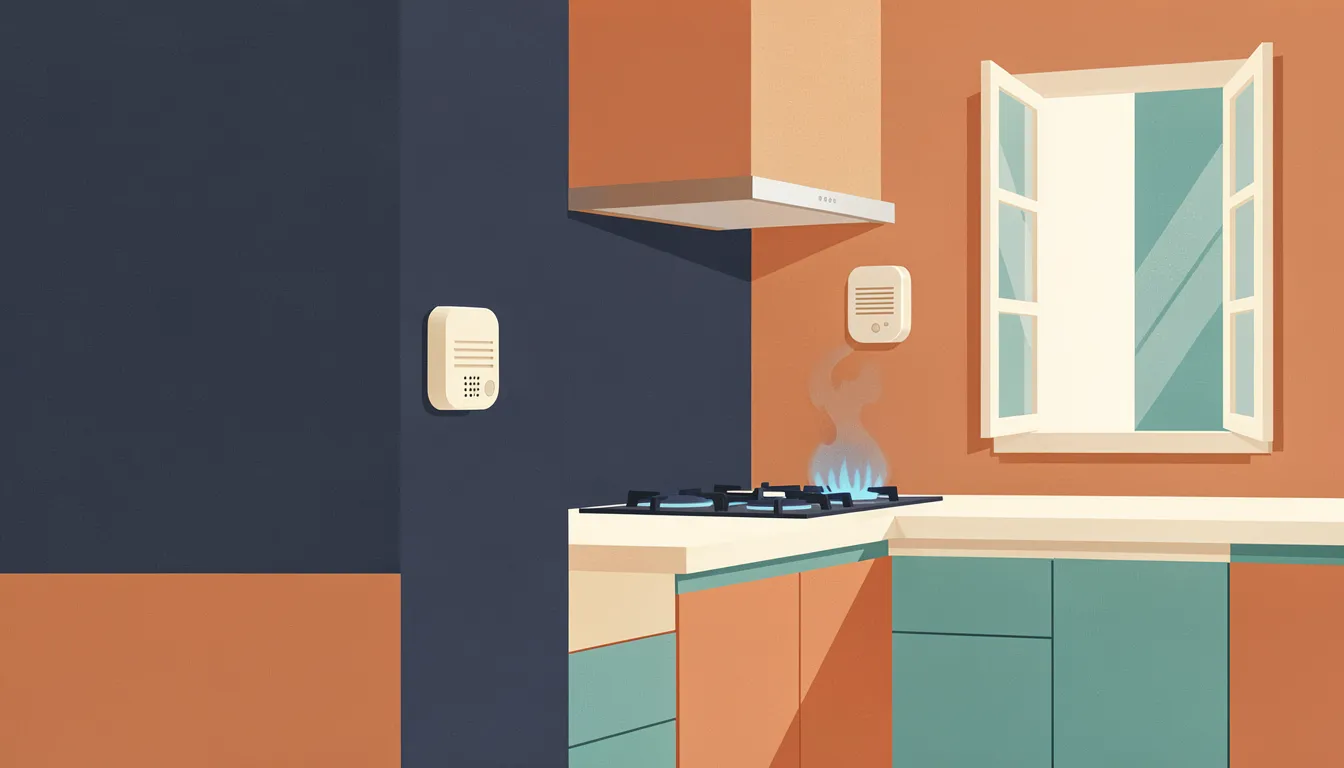
- Install suitable alarms, maintain appliances and learn symptoms and shut-offs without attempting unsafe repairs.
- Move into fresh air, avoid switches or flames and call emergency services from a safe place.
- Return only after professional clearance and replace or reset affected alarms.
Practical step-by-step guide
Two different dangers, often confused: a gas leak, which smells like rotten eggs or sulphur because an odour is added to the gas, and carbon monoxide (CO), a colourless, odourless gas nobody can smell. CO is made when boilers, stoves, fireplaces, cookers, generators or engines burn fuel badly, and it can make you seriously ill even while you sleep. A gas leak, on the other hand, can cause a fire or explosion if there is a spark. For both, the rule is the same: do not try to work it out yourself, get outside and call for help from there. This guide explains how to prevent, recognise and respond.
Before: what to prepare
- Install carbon monoxide alarms on every level of your home and near sleeping areas, and in every room with a gas, oil, wood or coal appliance. Choose alarms with a battery backup and marked EN 50291. Test them every month and replace them as the maker says (usually every 5 to 7 years).
- Have boilers, stoves, water heaters and gas cookers installed and checked by a qualified professional, with regular servicing. Have chimneys and flues cleaned.
- Never cover or block ventilation grilles and air vents in rooms with combustion appliances.
- Learn the signs of poor combustion: a yellow or orange flame instead of blue, soot stains around appliances, a pilot light that keeps going out, more condensation on windows.
- Know where your main gas shut-off valve is and how to close it, and teach everyone you live with. Keep the gas emergency service number where you can find it.
- Never use a barbecue, charcoal grill, camping stove, gas heater or generator indoors, on an enclosed balcony or in a garage, even with the door open, and never heat the home with the oven or stove. Charcoal stays dangerous for hours after the flames die. Do not use alcohol, gel or fondue burners to cook or heat indoors. Run a generator outdoors, at least 6 m (20 ft) from windows, doors and vents.
- Talk to everyone at home about the symptoms and the plan: who leaves, where you meet outside, who calls.
During: what to do
- If the CO alarm sounds, take it seriously: do not just silence it. Get everyone outside into fresh air at once, pets included.
- If you can do it without delaying your exit, switch off the appliance you suspect and open doors and windows, then leave. Do not waste time looking for the cause.
- Call emergency services from outside and explain what is happening. Do not go back in, not even to fetch something or check, until you are told it is safe.
- Know the symptoms of CO: headache, dizziness, nausea or vomiting, weakness, confusion, tiredness, chest or muscle pain, shortness of breath. They may come and go and ease when you are outside.
- If you smell gas, do not switch lights, switches or electrical appliances on or off, do not use any flame, lighter or match, and do not smoke.
- Do not use your phone, doorbell or intercom inside the area with the gas smell: they can create sparks. Get out and call from outside, away from the building.
- On your way out, if you can do it safely, open doors and windows and close the gas valve. Do not walk through rooms where the smell is strong to reach it. With bottled gas (LPG), do not go into cellars or low rooms: LPG is heavier than air and sinks.
- Warn neighbours by knocking on the door, not ringing the bell, and help them out. Keep people away from the building.
- Wait outside for help to arrive. If you feel unwell, do not drive yourself to hospital: get someone to take you or ask for an ambulance.
After: getting back to normal
- Go back in only when emergency services or a qualified engineer say it is safe. Do not relight appliances or turn the gas back on yourself: only a technician does that.
- If you had symptoms or were home when the alarm sounded, get checked by a doctor even if you feel better: a check is needed, often with tests and oxygen.
- Have the appliance or system inspected and repaired by a qualified professional before using it again.
- After a gas leak, have the system checked for tightness before relighting pilot lights or appliances.
- Test your alarms, change batteries and add more if some are missing. If you have a landlord or a building manager, let them know.
Mistakes to avoid
- Ignoring or silencing a CO alarm, or taking out its batteries because it "beeps too much".
- Opening a window, feeling better and staying in or going back to sleep: CO may still be there.
- Thinking you will smell CO: it has no smell, colour or taste.
- Looking for a gas leak with a flame, a lighter or by switching on a light.
- Phoning, ringing the doorbell or using a switch in a room that smells of gas.
- Heating with the oven, stove, barbecue, charcoal grill or a generator indoors or in an enclosed space.
- Going back in for belongings or to help someone: tell the rescuers.
- The CO alarm sounds and someone has a headache, dizziness, nausea or confusion: get out and call emergency services at once.
- Someone has trouble breathing, is confused, has lost consciousness, feels weak or has chest pain: call emergency services immediately.
- You smell strong gas or hear a hiss from a gas system: get out at once and call the gas emergency service or emergency services from outside.
- Several people, or pets, feel ill in the same place at the same time: get out and call emergency services.
- Symptoms keep coming back when you are at home and ease when you are out: have the system checked and talk to a doctor.
Before: Gas leak and carbon monoxide
Install suitable alarms, maintain appliances and learn symptoms and shut-offs without attempting unsafe repairs.
- Use local emergency management maps and guidance for storms, floods, wildfire, earthquakes or other local risks.
- Include medications, disability needs, infants, older adults, pets and anyone who may need help.
- Start with what you own, add gaps gradually and check food, water, batteries and documents on a schedule.
During
Move into fresh air, avoid switches or flames and call emergency services from a safe place.
Wireless Emergency Alerts require no signup on compatible devices. Also enable state and local alert systems and monitor NOAA Weather Radio where appropriate.
After
Return only after professional clearance and replace or reset affected alarms.
Fit the plan to the people
Include medication, disability, children, older adults, pets, language, transport and reliance on power or water.
- Water and nonperishable food for several days
- Food that works without refrigeration or complex cooking
- Manual can opener and household dietary supplies
- Prescription medicines and a written medication list
- First-aid and hygiene supplies
- Glasses, medical devices and backup-power planning
- Flashlights, compatible batteries and a radio
- Charged power banks, cables and paper contact list
Country information: United States
A hurricane evacuation zone, wildfire area and winter-storm region need different actions. Official instructions always take priority.
Find your state, tribal, territorial, county or city emergency management office. Record evacuation zones, shelters and official alert sources.
Use 911 only for immediate emergencies. Keep non-emergency numbers and utility outage contacts available offline.
Frequently asked questions
How can I tell if there is carbon monoxide?
You cannot: it is colourless, odourless and tasteless. You only find out from an alarm or from symptoms such as headache, dizziness, nausea and confusion, which may ease when you go outside.
Where should I put CO alarms?
On every level of your home and near sleeping areas, as well as in rooms with appliances that burn gas, oil, wood or coal. Choose alarms with a battery backup.
Can I use a generator or barbecue indoors if I open a window?
No. They produce carbon monoxide, which builds up even with windows open. Use them only outdoors, at least 6 m (20 ft) from doors, windows and vents, and never in a garage, even with the door open or on an enclosed balcony.
I smell gas: can I phone from inside?
No. Do not switch lights or appliances on or off, do not use a flame, and do not phone indoors. Get out, open doors and windows if you can do it safely, and call from outside.
Does this guide apply to every situation?
No. It is an organising baseline; the hazard, location and official instructions may require different action.
Official sources
Hours72Kit summarizes public guidance and is not a government or emergency service. Follow current official instructions.
Keep your plan close.
Pocket72 will turn guides, checklists and recurring reviews into a personal plan. Real product screens will be added when ready.