Guide contents
Practical overviews to prepare your household, understand hazards and reach the right official local sources.
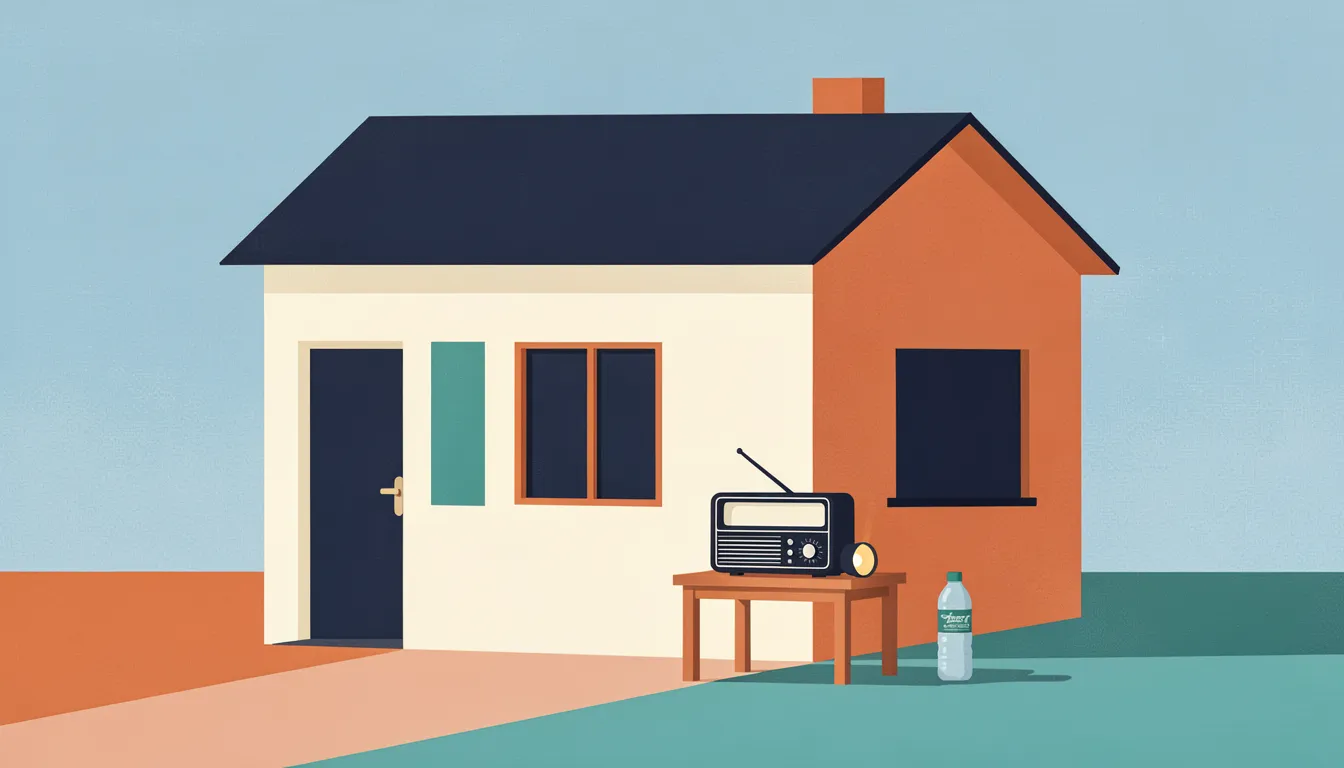
- Know the local plan, keep radio and medicines ready and identify an inner room away from outside walls.
- Get inside, close openings and ventilation and follow shelter, evacuation and iodine instructions; stay in at least 24 hours unless told otherwise; never self-medicate.
- Wait for official monitoring and advice before going out, eating exposed produce or cleaning surfaces.
Practical step-by-step guide
A radiological or nuclear emergency can come from an accident at a power plant, a transport accident involving radioactive material, an occupational incident or, far more rarely, an explosion. The scale varies a lot, but the protective steps for the public are the same: get inside a building, stay inside and listen for official information. Putting walls between you and the outside protects you while the authorities work out what is happening. This page does not replace local instructions: if the authorities tell you to evacuate, to take a medicine or to do something else, follow them.
Before: what to prepare
- Learn about the risks in your area (for example nearby plants or facilities) and what local emergency plans say. Follow the official channels for alerts.
- Keep a battery or wind-up radio: if phones, internet or power fail, it is the most reliable way to get instructions.
- Prepare a kit with water, sealed food, personal medicines, a torch, batteries and a radio. Add a change of clothes for each person and plastic bags for contaminated clothing.
- Pick the most protected place in your home: an interior room with few windows, ideally on a lower floor or in a basement if you have one. The more walls and mass around you, the better.
- Learn how to close windows, doors and vents quickly, and how to switch off fans, air conditioners and forced-air heating that draw in outside air.
- Find out what school, work and care-home plans say about sheltering indoors and evacuation, and agree with your family where to meet and whom to contact if you are separated.
- Explain calmly to children what to do: go inside, stay inside, listen to the radio and wait for instructions.
- Do not buy or take iodine tablets on your own, and do not use old tablets you may have. They protect only the thyroid, not the rest of the body, and can be harmful if taken without need. Take them only if the authorities say so: they decide who takes them, when and how (priority: children, teenagers, pregnant and breastfeeding women).
During: what to do
- If you get an alert or suspect a release of radiation, go into the nearest building at once and move away from windows. Put as many walls as you can between you and the outside.
- Stay inside for at least 24 hours (possibly about 48), unless the authorities say it is safe to go out or an immediate danger forces you out (fire, gas leak, collapse, smoke or gas in the building, serious injury).
- Close windows and doors and, if possible, switch off fans, air conditioners and forced-air systems that bring in outside air. Close fireplace dampers too.
- Listen to the radio or official channels. The authorities will say whether to stay inside, for how long, and whether to evacuate and by which routes.
- If you are told to evacuate, listen carefully for routes, shelters and procedures, and follow only those instructions.
- Bring pets and service animals inside too. Do not leave them outdoors.
- Do not rush to collect children from school: schools have their own plans and going outside exposes you. Wait for official instructions on how and when you will be reunited.
- Do not take iodine or other products on your own: take them only if the authorities say so and exactly as they instruct.
- Keep phone lines free for emergencies: use short messages and do not call the emergency services for general information.
After: getting back to normal
- If you were outside during the release or think you have radioactive dust on you, carefully take off your outer clothes and shoes without shaking them, and seal them in a bag away from people and pets.
- If you can, shower or wash with soap and water, especially uncovered skin and hair. If you cannot, wipe skin and hair with a clean damp cloth. Avoid touching your eyes, nose and mouth.
- Do not use household cleaning wipes on your skin. Hand sanitiser does not protect against radioactive material.
- Brush a pet that was outside gently and wash it with soap and water. Eat and drink food that was inside the house or in sealed containers.
- Do not eat vegetables from your garden, or food or drinks left uncovered outdoors, until the authorities say it is safe. Do not return to evacuated areas until the authorities say so.
- If you are injured or unwell, listen for instructions on where to get care, and tell staff if you are in a shelter. If you feel upset, talk to someone: these situations are very stressful.
Mistakes to avoid
- Going outside to look, film or reach relatives: exposure depends on how long you spend outdoors.
- Evacuating on your own without instructions: routes and timing are decided by the authorities according to where the risk is.
- Taking iodine tablets, medicines or supplements "just in case": they can do harm and are not needed unless the authorities say so.
- Leaving windows or ventilation systems open that bring in outside air.
- Rushing to collect children from school, exposing yourself and them, instead of waiting for instructions.
- Eating or drinking food left uncovered outdoors, or garden vegetables, before the all-clear.
- Believing unverified rumours and messages on social media: rely on official sources.
- You are injured, have burns, severe vomiting or other serious symptoms, or someone near you is unwell: call the emergency services and follow instructions for medical care.
- A fire, gas leak or collapse forces you out of your shelter: leave, go somewhere safe and call for help.
- Someone depends on oxygen, a ventilator, dialysis or other continuous care and cannot get it: alert the emergency services at once.
- If you are in a shelter and think you have radioactive material on you, tell the staff straight away.
- You feel overwhelmed by anxiety or panic: ask a relative, a helpline or health staff for support.
Before: Radiological or nuclear emergency
Know the local plan, keep radio and medicines ready and identify an inner room away from outside walls.
- Use local emergency management maps and guidance for storms, floods, wildfire, earthquakes or other local risks.
- Include medications, disability needs, infants, older adults, pets and anyone who may need help.
- Start with what you own, add gaps gradually and check food, water, batteries and documents on a schedule.
During
Get inside, close openings and ventilation and follow shelter, evacuation and iodine instructions; stay in at least 24 hours unless told otherwise; never self-medicate.
Wireless Emergency Alerts require no signup on compatible devices. Also enable state and local alert systems and monitor NOAA Weather Radio where appropriate.
After
Wait for official monitoring and advice before going out, eating exposed produce or cleaning surfaces.
Fit the plan to the people
Include medication, disability, children, older adults, pets, language, transport and reliance on power or water.
- Water and nonperishable food for several days
- Food that works without refrigeration or complex cooking
- Manual can opener and household dietary supplies
- Prescription medicines and a written medication list
- First-aid and hygiene supplies
- Glasses, medical devices and backup-power planning
- Flashlights, compatible batteries and a radio
- Charged power banks, cables and paper contact list
Country information: United States
A hurricane evacuation zone, wildfire area and winter-storm region need different actions. Official instructions always take priority.
Find your state, tribal, territorial, county or city emergency management office. Record evacuation zones, shelters and official alert sources.
Use 911 only for immediate emergencies. Keep non-emergency numbers and utility outage contacts available offline.
Frequently asked questions
Should I take iodine tablets?
No, not on your own initiative. Iodine tablets help only in specific situations and only if the authorities tell you, saying who should take them and how. Wait for their instructions.
How long do I need to stay indoors?
At least 24 hours, possibly about 48, and until the authorities say you can go out. Radiation levels fall quickly in the first 24 hours, but always follow local instructions.
Should I go and get my children from school?
Follow the instructions of the school and the authorities. Schools have plans for sheltering and evacuation, and going out can expose you. Wait for official instructions on how and when you will be reunited.
Can I eat and drink what I have at home?
Yes, food and drink that were inside a building are safe. Sealed containers that were outside should be wiped with a damp cloth before use. Do not eat garden vegetables or uncovered food left outside until you get the all-clear.
Does this guide apply to every situation?
No. It is an organising baseline; the hazard, location and official instructions may require different action.
Official sources
Hours72Kit summarizes public guidance and is not a government or emergency service. Follow current official instructions.
Keep your plan close.
Pocket72 will turn guides, checklists and recurring reviews into a personal plan. Real product screens will be added when ready.