Guide contents
Practical overviews to prepare your household, understand hazards and reach the right official local sources.
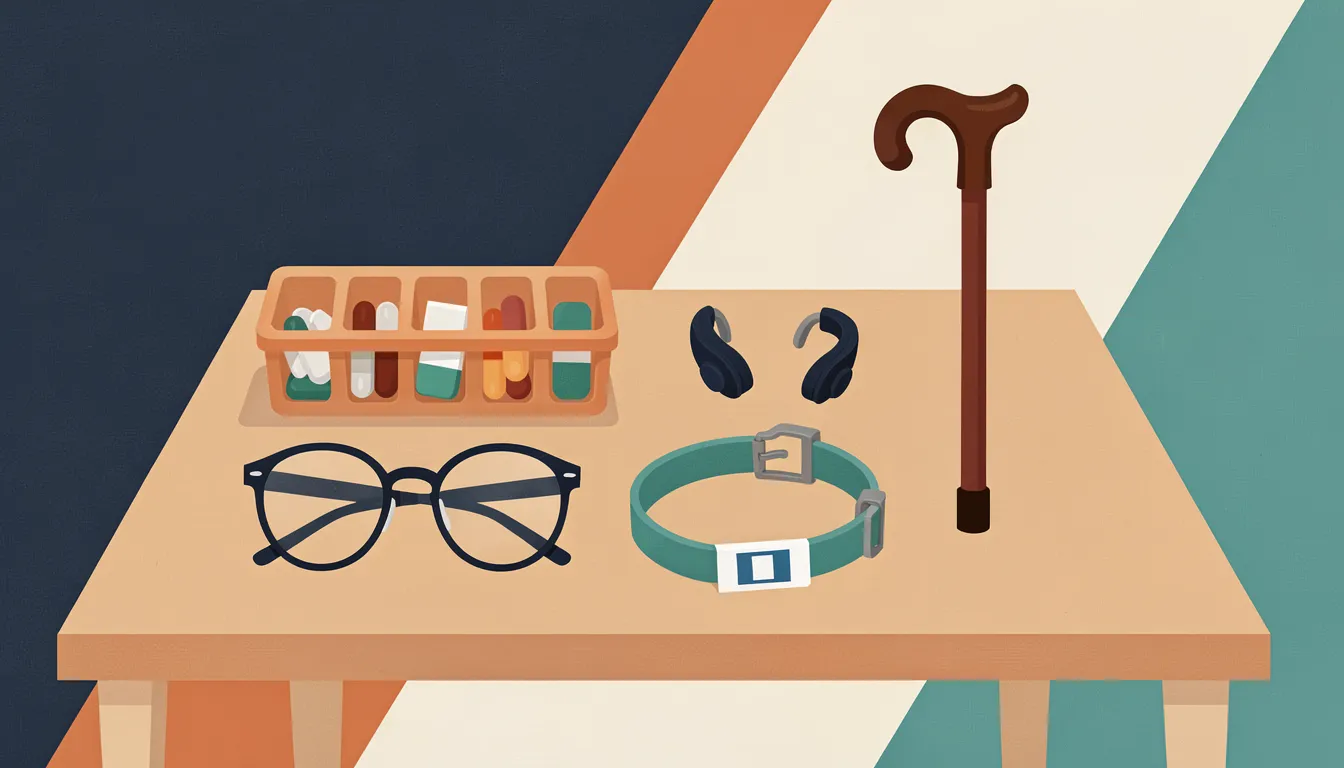
- Record medication, equipment, communication, food and transport needs and build a support network.
- Protect continuity of care and power-dependent devices and state needs clearly to responders.
- Replace used medicines and supplies and review any interruption with appropriate professionals.
Practical step-by-step guide
Emergencies do not affect everyone in the same way. Babies and young children, older adults, people with disabilities or chronic illness, and anyone who depends on medicines, powered medical equipment, mobility aids or a carer may need extra supplies, extra time or a different way of getting information. A plan built for the "average" household can leave them behind. Ask yourself what happens if daily needs cannot be met for several days, who can help and what you need to carry. The most important steps are talking with health professionals, building a support network and keeping essentials together. Caregivers need a plan for themselves too.
Before: what to prepare
- List each person's daily needs: medicines, devices, diet, mobility, communication, sensory and cognitive needs, language. Ask what you would do if these could not be met for several days.
- Build a support network of people (relatives, neighbours, friends, carers) who know your needs and where your supplies are. Give at least one of them a spare key and practise the plan together.
- For medicines, ask your doctor or pharmacist how to build an emergency supply and how to store those that must stay cool (cool bag and ice packs). Keep an up-to-date list with the name of each medicine, why it is taken, how often, medical supplies and allergies.
- If you use equipment that needs electricity, ask your doctor what to do in a power cut, tell your electricity supplier where a priority list exists, know more than one facility for dialysis or other life-sustaining treatment, and keep chargers and spare batteries.
- Plan how you would leave home: ask your local authorities about accessible transport, choose a route, keep mobility aids within reach and think about how you would replace them if lost or broken.
- Prepare for communication: printed cards explaining how to communicate with you, spare hearing-aid batteries, pen and paper, a battery lantern for lip-reading or sign language, large-print or Braille labels. For people who struggle with noise and change, keep comfort items and simple instructions, ideally with pictures.
- For babies and young children, keep formula if needed, bottles, nappies, wipes, suitable food, spare clothes, a comfort toy and any medicines advised by the paediatrician. If you do not speak the local language well, keep a card with essential phrases translated.
- Ask your local authorities whether a voluntary registry exists for people who need help in emergencies and sign up. Wear a medical alert bracelet or carry a card with essential medical information, and store it on your phone too.
During: what to do
- Follow official alerts in a format you can use (text, radio, captions) or ask someone to relay them. If the authorities say to evacuate, leave early: special needs mean you need more time.
- Contact your support network straight away: say where you are and whether you need help. Do not wait for things to get worse.
- Keep with you medicines in their original packs with the list, devices, chargers, glasses, hearing aids and mobility aids. Refrigerated medicines go in the cool bag with ice packs.
- If powered medical equipment loses power, switch to the backup plan agreed with your doctor; if the supply is not enough, call the emergency services at once. Never use candles, flames or smoking near oxygen. Run generators only outdoors, far from windows, doors and vents.
- With babies and young children, keep mealtimes and sleep routines as far as you can. Prepare formula with safe water (bottled, or boiled and cooled as the authorities say) and never water it down to make it last. If you breastfeed, continuing is generally recommended: ask a health professional if you have doubts. Keep little ones warm or cool as the season requires.
- In extreme heat or cold, check in person on older people and people in fragile health: offer fluids (unless a doctor has said otherwise) and make sure they are dressed appropriately. Do not leave them alone if you think they may be at risk.
- For people with sensory or cognitive needs, stay close, use short clear sentences, keep familiar objects and, in a shelter, ask for a quieter space and tell staff what helps.
- If you care for someone, do not be separated from them, tell responders about their needs and remember to eat, drink and rest yourself. Ask for relief if you are exhausted.
- Never leave a baby, child, older person or pet in a parked car, not even for a few minutes: it heats up very fast.
After: getting back to normal
- Restock medicines and supplies straight away. If medicines or materials were left hot, wet or unrefrigerated, ask your pharmacist or doctor before using them, and never decide alone about life-saving medicines.
- Check aids and devices: have damaged ones repaired or replaced and report lost equipment to those who can help you.
- Resume treatments and care (dialysis, rehabilitation, check-ups) as soon as possible and contact the service to find out whether times or locations have changed.
- Watch children, older adults and people with cognitive difficulties: fear, agitation and changes in sleep or appetite are common. Restore routines, listen and, if distress lasts, ask a professional for help.
- Review what worked and what did not: update lists, your support network and your registry details, and thank those who helped.
Mistakes to avoid
- Assuming rescuers and shelters already know your needs: you or your carer must say so, as early as possible.
- Leaving prescription renewals to the last minute and having no spare medicines or medical supplies.
- Relying on a single charged battery for an important device and not having spoken to your doctor or electricity supplier.
- Leaving medicines in a car or a hot place, or stopping them without medical advice because of the emergency.
- Making the plan for the person concerned without involving them: they know best what they need.
- Evacuating late, or forgetting the carer: those who give care also need water, rest and a plan.
- A person who depends on powered medical equipment (oxygen, ventilator, dialysis) no longer has enough power or battery: call the emergency services immediately.
- Someone cannot get a life-sustaining medicine or treatment: contact a doctor, a health service or the emergency services straight away.
- A baby or child is unusually drowsy, refuses to drink or feed, shows signs of dehydration, has a high fever or has difficulty breathing: get medical help at once.
- An older adult or a person with a chronic illness is confused, very hot or very cold, faints or has chest pain: get medical help at once.
- A person with cognitive difficulties has wandered off or is missing: alert the rescuers at once and give them a recent photo.
Before: Children, older adults and specific needs
Record medication, equipment, communication, food and transport needs and build a support network.
- Use local emergency management maps and guidance for storms, floods, wildfire, earthquakes or other local risks.
- Include medications, disability needs, infants, older adults, pets and anyone who may need help.
- Start with what you own, add gaps gradually and check food, water, batteries and documents on a schedule.
During
Protect continuity of care and power-dependent devices and state needs clearly to responders.
Wireless Emergency Alerts require no signup on compatible devices. Also enable state and local alert systems and monitor NOAA Weather Radio where appropriate.
After
Replace used medicines and supplies and review any interruption with appropriate professionals.
Fit the plan to the people
Include medication, disability, children, older adults, pets, language, transport and reliance on power or water.
- Water and nonperishable food for several days
- Food that works without refrigeration or complex cooking
- Manual can opener and household dietary supplies
- Prescription medicines and a written medication list
- First-aid and hygiene supplies
- Glasses, medical devices and backup-power planning
- Flashlights, compatible batteries and a radio
- Charged power banks, cables and paper contact list
Country information: United States
A hurricane evacuation zone, wildfire area and winter-storm region need different actions. Official instructions always take priority.
Find your state, tribal, territorial, county or city emergency management office. Record evacuation zones, shelters and official alert sources.
Use 911 only for immediate emergencies. Keep non-emergency numbers and utility outage contacts available offline.
Frequently asked questions
Who should I tell about what I need?
Relatives, neighbours and carers, your doctor, your electricity supplier if you depend on powered equipment, and your local authorities where a voluntary registry exists. Count on at least one person who knows your needs and where your supplies are.
What do I do about medicines that must be kept cool?
Ask your pharmacist how long they can stay at room temperature and keep a cool bag with ice packs. Insulin in use is usually fine at room temperature for about 28 days, but never in heat or freezing: read the leaflet. Do not throw other medicines away or use them on your own initiative if they have lost their cold: ask for advice first.
Are there registries for people who need help?
In many places local authorities keep voluntary registries of people who need assistance in an emergency. Rules vary: ask your local authority whether one exists and how to sign up.
Can I take an assistance animal to a shelter?
Rules differ: some shelters accept only assistance animals. Ask your local authorities in advance and follow their instructions.
Does this guide apply to every situation?
No. It is an organising baseline; the hazard, location and official instructions may require different action.
Official sources
Hours72Kit summarizes public guidance and is not a government or emergency service. Follow current official instructions.
Keep your plan close.
Pocket72 will turn guides, checklists and recurring reviews into a personal plan. Real product screens will be added when ready.