Guide contents
Practical overviews to prepare your household, understand hazards and reach the right official local sources.
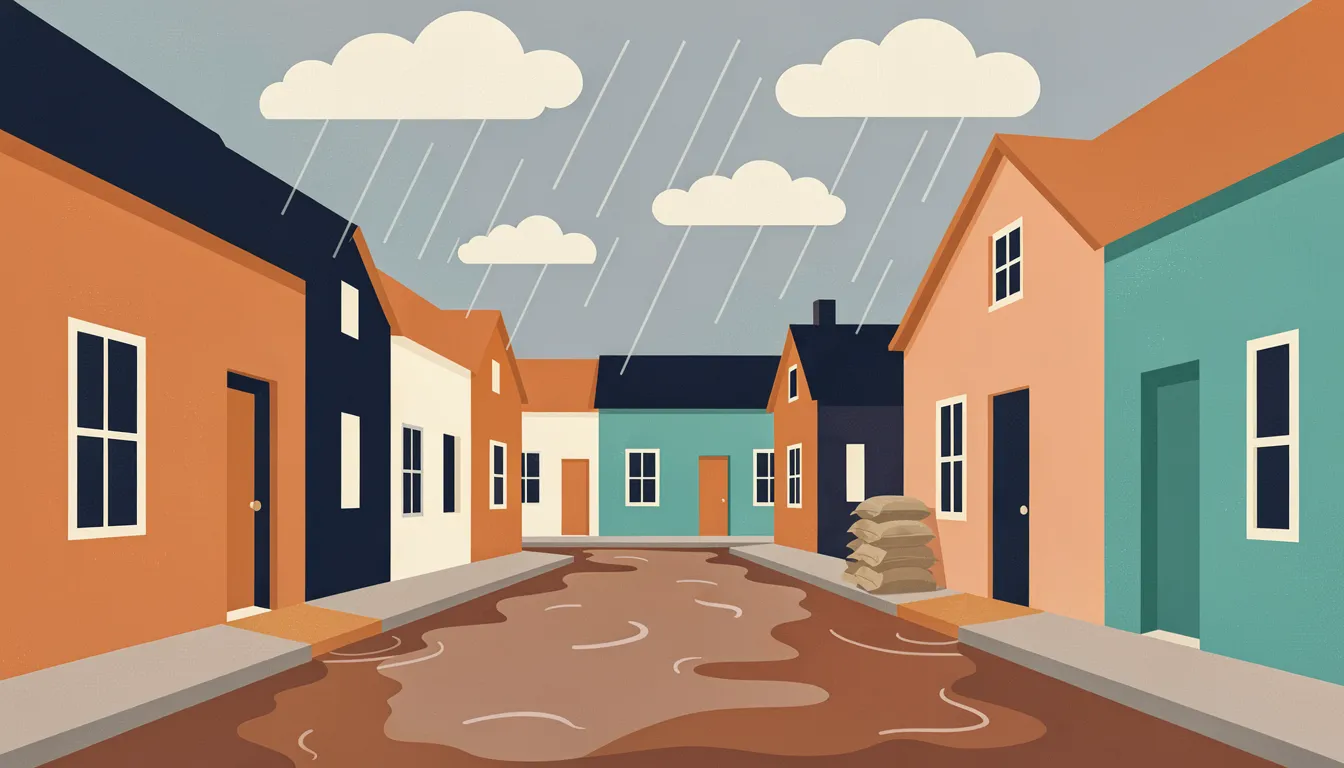
- Check maps, warnings and routes to higher ground; keep essentials out of basements.
- Move away from rivers and underpasses and never cross moving floodwater on foot or by car.
- Return only when cleared and treat water and utilities as unsafe until officially confirmed.
Practical step-by-step guide
A flood is an overflow of water onto land that is normally dry. It can build slowly, as a river rises over days, or in minutes, as in a flash flood, sometimes without any rain falling where you are. The biggest danger is moving water: about 15 cm can knock you off your feet and about 30 cm can carry a vehicle away. Hidden risks remain afterwards: contaminated water, live electrical systems and mould. Preparing means knowing your local risk, knowing where higher ground is, keeping a go-bag ready and listening to the local authorities.
Before: what to prepare
- Find out about flood risk where you live, work and study by asking your local authority or civil protection service. Remember that water can reach places that maps do not show.
- Sign up for official alerts in your area and keep a battery or wind-up radio: weather warnings and evacuation instructions come through them.
- Agree with your household on a place on higher ground and the route to reach it. Decide where you would stay if you had to leave home, and how you would take pets.
- Pack a go-bag: water, non-perishable food, a torch, a power bank, a radio, personal medicines, a blanket and spare clothes, plus phone chargers.
- Keep documents, contracts and key photos in a waterproof container, and store a password-protected digital copy as well.
- Move valuables, electrical items and chemicals to higher floors, and keep gutters, drains and downpipes around your home clear.
- If you live in a risk area, ask a professional about backflow valves and a sump pump, and check whether your insurance covers flooding: it is often excluded.
- Learn where your electrical panel is and how to switch the power off, so you can do it only if it is safe and there is no water around you.
During: what to do
- Listen to the radio, official alerts and the local authorities. If you are told to evacuate, go straight away: do not wait to see the water rise.
- If your home is likely to flood, do not wait for an order: move to somewhere higher and safer early.
- Do not walk, swim or drive through flood water. About 15 cm of moving water can knock you down and about 30 cm can carry a vehicle away.
- Never drive around barriers or road-closed signs: they are there to direct you safely out of the flooded area.
- Stay away from bridges over fast water, riverbanks and underpasses: the current can wash them away without warning.
- Do not enter a room or basement if water covers the sockets or cords are submerged. If you see sparks or hear buzzing or crackling, get out.
- Switch off gas and power only if you can do it safely, without touching water and with dry hands. Never touch electrical devices with wet hands or feet.
- If your car is trapped in fast-moving water, stay inside; if water rises inside the car, climb onto the roof and call for help.
- If trapped in a building, go to the highest level. Go onto the roof only if you must, and signal for help. Do not climb into a closed attic: you could get trapped.
- Follow the authorities' instructions on whether to evacuate, move to a higher floor or stay put: it depends on the type of flooding.
After: getting back to normal
- Return home only when the authorities say it is safe. Avoid driving except in emergencies, and do not go to look at affected areas: you may get in the way of rescue work.
- Do not touch electrical equipment if it is wet or you are standing in water. Have an electrician check the system before the power is turned back on. Fallen or submerged cables can charge the water.
- Do not switch the power or gas back on if the system got wet: ask a qualified technician to check it. Never run a generator, stove or barbecue indoors: carbon monoxide can kill.
- Treat flood water as contaminated with sewage and chemicals. Avoid wading in it, and ask the authorities whether tap water is safe: you may be told to boil it.
- When cleaning up, wear heavy gloves, boots, protective clothing and a suitable mask. Keep children away from the work, take breaks and work with a partner.
- Throw away food that touched flood water. If you can, dry your home within 24-48 hours; after that, assume there is mould. People with asthma or lung conditions should not enter rooms with mould.
- Use generators or petrol machinery only outdoors and away from windows. Let your family know you are safe, and ask for support if the stress becomes too much.
Mistakes to avoid
- Driving through a flooded road ‘because it looks shallow’: the water can hide holes, collapsed road surfaces and debris, and little current is needed to sweep a vehicle away.
- Waiting for an evacuation order when your home is about to flood: flash floods leave only minutes.
- Going home as soon as the water drops, before the all-clear: floors, ceilings and wiring may be damaged.
- Wading through flood water out of curiosity or to save belongings: besides the current, there is debris, electricity and contamination.
- Climbing into a closed attic: if the water keeps rising you have no way out.
- Using generators, stoves or barbecues indoors or in a garage to dry or heat the home: carbon monoxide is invisible and deadly.
- Eating food or drinking water that has touched flood water without checking first.
- You are trapped by water at home, in a car or outdoors and cannot reach a safe place: call the emergency services immediately and move to the highest point you can.
- You see fallen electrical cables or sparks, or smell gas: move away and call for help from a safe place, without touching switches.
- Someone has been swept off their feet, has breathed in water, is injured or feels very unwell: call the emergency number straight away.
- Anyone has a headache, nausea or dizziness while a generator or stove is running: get them outside into fresh air and call the emergency services.
- After the flood someone becomes ill (fever, vomiting, severe diarrhoea or a dirty wound): contact a doctor or your local health service.
Before: Flood
Check maps, warnings and routes to higher ground; keep essentials out of basements.
- Check flood risk, severe-weather advice, your council and the resilience forum or partnership for your nation.
- Include prescriptions, mobility or communication needs, babies, older people, pets and neighbours.
- Store supplies where they are easy to reach and review them every six months or when needs change.
During
Move away from rivers and underpasses and never cross moving floodwater on foot or by car.
UK Emergency Alerts can sound on compatible phones without an app. Government will never ask for payment or personal information in an alert.
After
Return only when cleared and treat water and utilities as unsafe until officially confirmed.
Fit the plan to the people
Include medication, disability, children, older adults, pets, language, transport and reliance on power or water.
- Bottled water and food that keeps
- Food that does not rely on refrigeration or lengthy cooking
- Manual tin opener and supplies for dietary needs
- Essential medication and a written medicines list
- First-aid and hygiene items
- Baby, disability, mobility and pet supplies
- Battery or wind-up torch and radio
- Power bank, cables and paper contact list
Country information: United Kingdom
Flooding, coastal hazards, storms and utility failures vary by location. Follow instructions from emergency responders and local authorities.
Use Be Ready and your council, then check the correct resilience body: an LRF in England or Wales, an RRP or LRP in Scotland, or an EPG in Northern Ireland. Use the flood-warning service for your nation.
Use 999 or 112 for immediate danger. For urgent, non-life-threatening health help, check the correct NHS service for your nation; Northern Ireland uses local Phone First and GP out-of-hours arrangements.
Frequently asked questions
How much water is dangerous?
About 15 cm of moving water can knock you down, and about 30 cm can carry a car away. The water can also hide holes, debris and electrical cables.
Should I evacuate or stay at home?
It depends on the type of flood and your situation: follow the instructions of the local authorities. If your home is about to flood or you are told to evacuate, move to higher ground straight away.
Can I drink tap water after a flood?
Wait for official advice: drinking water may be contaminated and the authorities may tell you to boil it. Do not use doubtful water for drinking, cooking or brushing your teeth.
What if my car is trapped in water?
If the water is moving fast, stay in the car and call for help. If water is rising inside, get out onto the roof and then signal for help.
Does this guide apply to every situation?
No. It is an organising baseline; the hazard, location and official instructions may require different action.
Official sources
Hours72Kit is independent and does not replace emergency services, government advice or professional support.
- Ready.gov (FEMA) — Floods ↗
- World Health Organization — Floods ↗
- American Red Cross — Flood safety ↗
- GOV.UK Be Ready — hazards ↗
- Be Ready — prepare for emergencies ↗
- UK Emergency Alerts ↗
- Local resilience bodies across the UK ↗
- Ready Scotland ↗
- NI Direct — be ready for emergencies ↗
- Check flood risk ↗
- Met Office weather warnings ↗
Keep your plan close.
Pocket72 will bring personal checklists, household information and review reminders together. Real screens will be added when ready.